
Reshapeorbit. OrbitalX is building HALO, a saucer-shaped satellite platform for defence, surveillance and reconnaissance, built around ion propulsion, metamaterials and 3D-printed structure.
- Platform
- HALO
- Geometry
- Lenticular disc
- Orbits
- VLEO to GEO
- Propulsion
- Electric
Why a new shape
Most satellites are boxes because boxes are easy to build. HALO starts from the mission instead: a disc that stacks tightly for launch, stays stable in orbit and turns its whole upper face into working surface.
Meet HALO
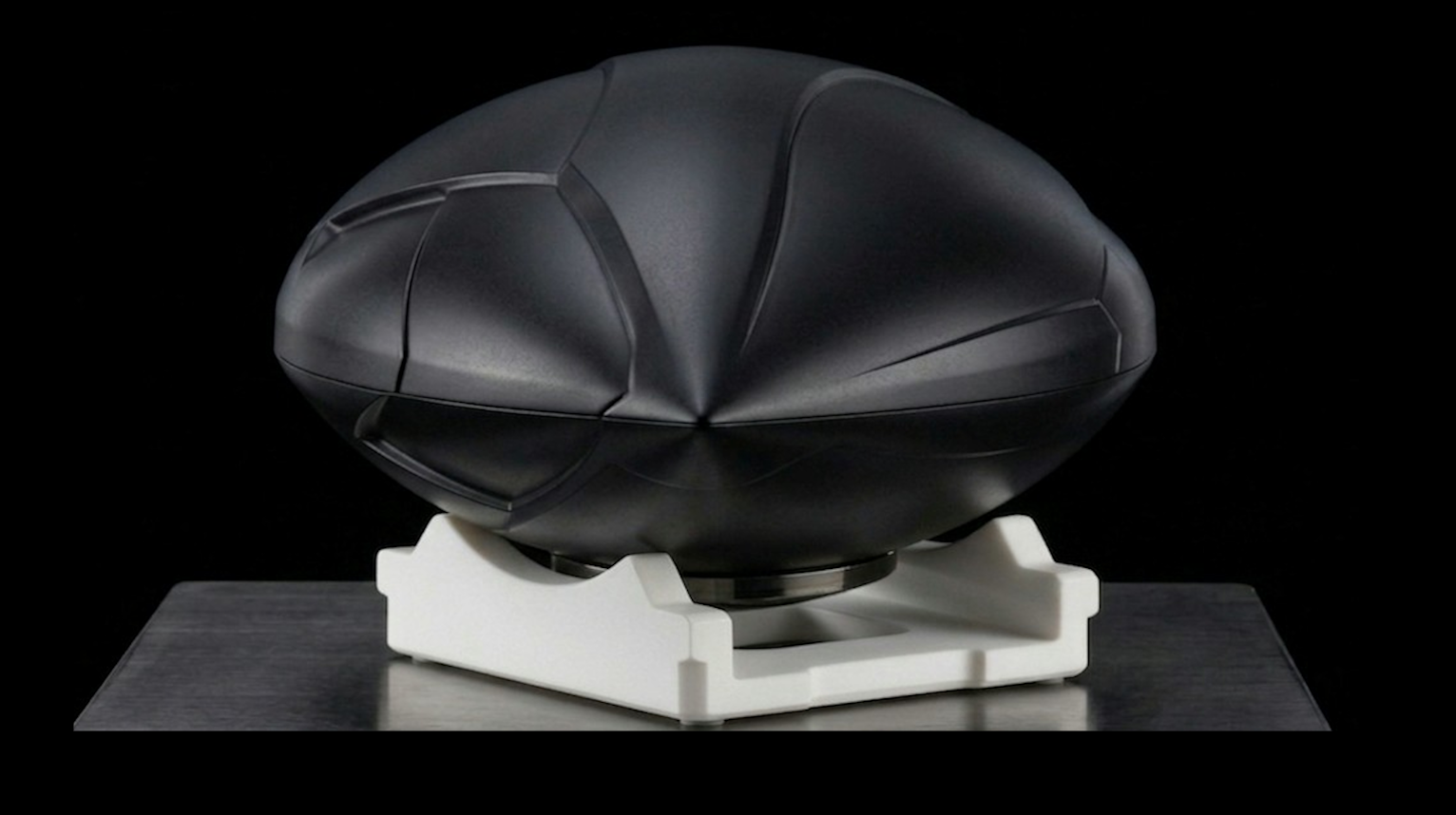
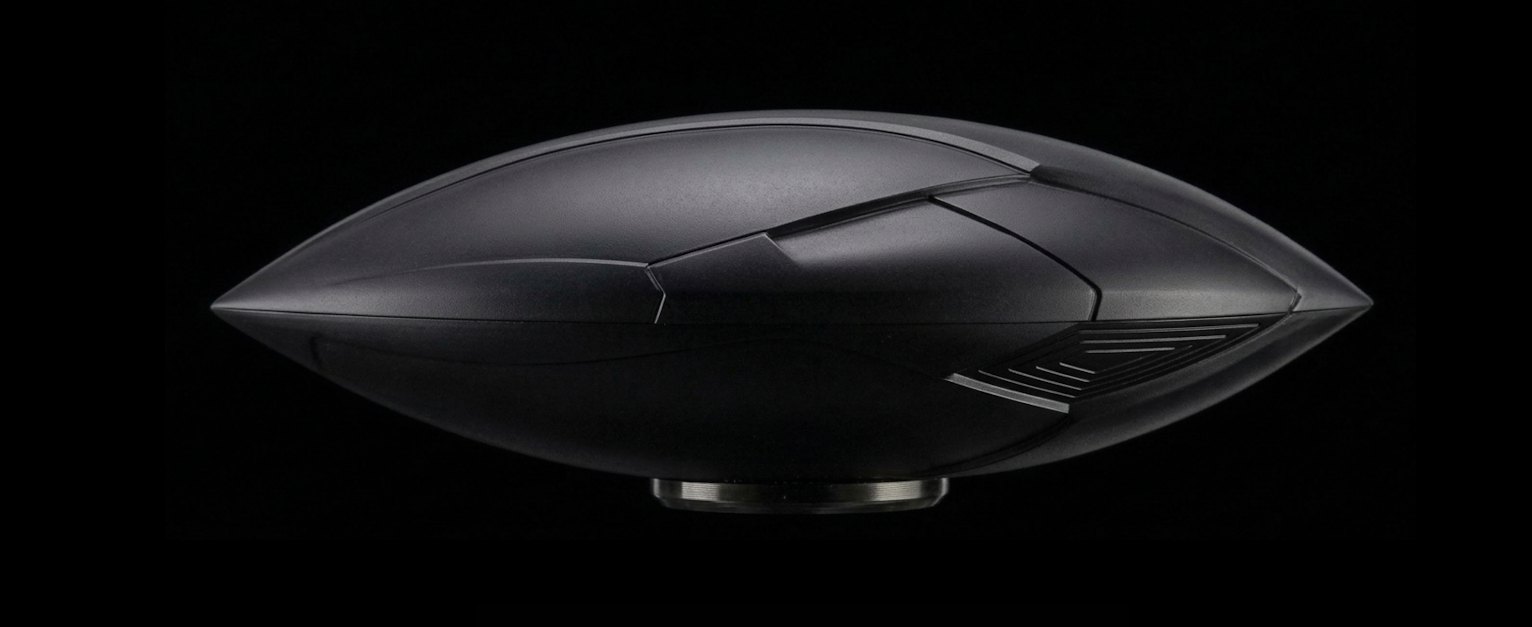
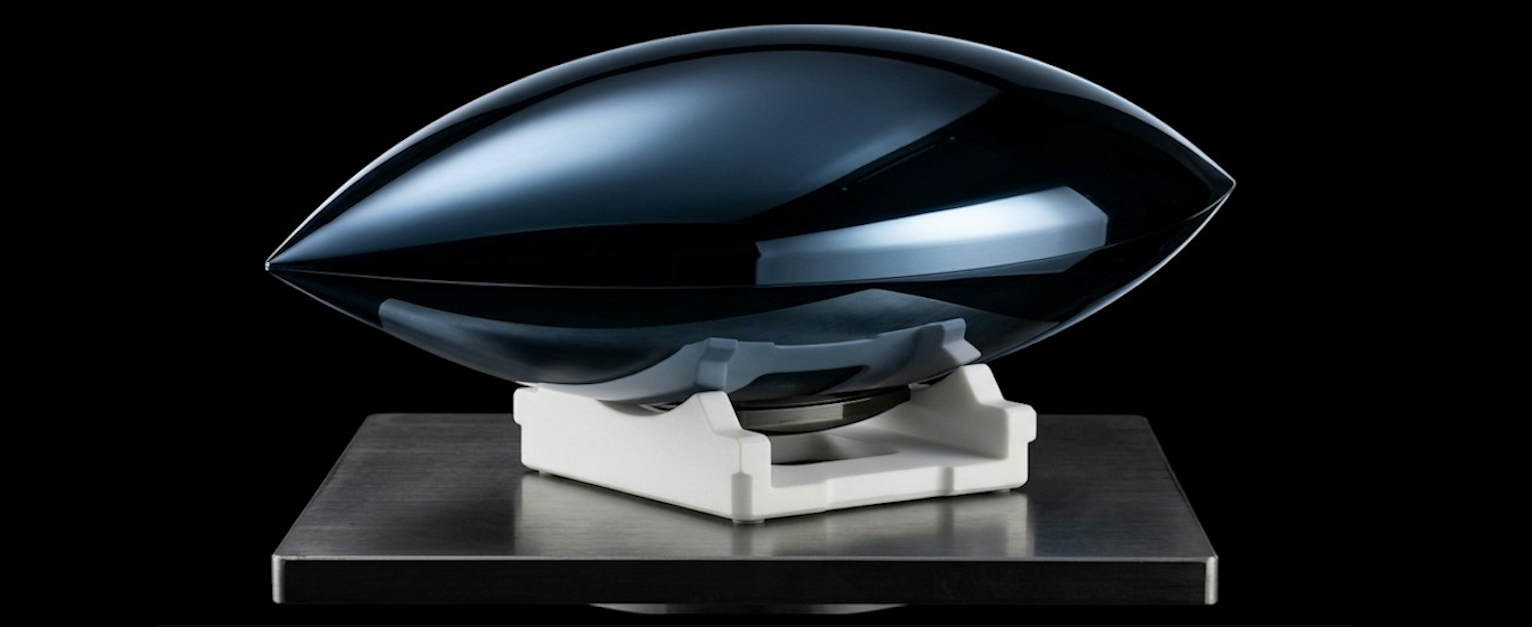
A pointed lens 3.0 metres long, with a raised dorsal keel, eight payload bays and electric thrusters in its flanks. Drag to turn it.

What is a saucer-shaped satellite?
A spacecraft built as a flat or lens-shaped disc instead of a box. The shape gives more surface for power and antennas, stacks tightly for launch, spins stably and cuts drag when flown edge-on.
-
 01
01Print
Primary structure, brackets and propellant manifolds are printed in metal, shaped for the loads each part actually sees.
-
 02
02Integrate
Payloads slot into modular bays either side of the core. Power, avionics and propellant sit in the shielded central core.
-
 03
03Launch
Discs nest flat inside the fairing, using launch volume efficiently and simplifying rideshare stacking.
-
 04
04Operate
Electric propulsion holds station, offsets drag and moves the platform when the mission changes.
Why a disc
The same internal volume, arranged two ways. Geometry alone changes how much surface faces the Sun, how much faces the airflow in very low orbit, and how the craft wants to spin.
- Upward-facing area
- 1.43m²
- Smallest frontal area
- 1.43m²
- Spin-axis inertia ratio
- 1.00×
- Upward-facing area
- 2.82m²
- Smallest frontal area
- 1.01m²
- Spin-axis inertia ratio
- 1.11×
Illustrative geometry at equal volume: a 1.20 m cube against HALO’s 3.0 × 1.35 × 0.95 m reference hull, uniform density assumed. The inertia ratio compares the moment about the vertical axis with the largest transverse moment; above 1, the vertical axis is the major axis and spin about it is passively stable. These figures describe geometry, not HALO flight performance.
Built for contested space
Space is now an operational domain. Platforms have to be harder to find, quicker to adapt and able to keep working when conditions turn against them.
Low signature
The disc's shaping and metamaterial surfaces are designed to manage how HALO reflects and emits energy, reducing how easily it can be detected and tracked.
Adaptive
Modular payload bays, software-defined systems and electric propulsion let one platform change role, orbit or tasking without a new satellite.
Resilient
Radiation-tolerant electronics, redundant avionics and a shielded central core keep data flowing through harsh environments and interference.
One platform, every regime
- Representative altitude
- 550 km
- Orbital period
- 95.6 min
- Orbital velocity
- 7.59 km/s
- Environment
- South Atlantic Anomaly passes; atomic oxygen erosion
Low Earth orbit is the workhorse for surveillance and reconnaissance.
Period and velocity are calculated for a circular orbit. Animation is time-compressed.
Explore the technology
- Saucer-shaped satellitesWhat disc-shaped spacecraft are, why the shape works, and where HALO fits.
- HALO vehicleThe saucer-shaped bus: geometry, structure, subsystems and payload bays.
- Ion propulsionElectric thrusters for station-keeping, drag make-up and repositioning.
- MetamaterialsEngineered structures that steer beams, manage heat and carry load.
- Additive manufacturePrinted metal structures, topology-optimised for the loads they carry.
- Systems architectureHow power, control, data and payloads fit together on one platform.
Engineered in the UK for government and defence partners
OrbitalX combines aerospace engineering with research into metamaterials and advanced manufacturing to give government and defence partners access to surveillance, reconnaissance and rapid-response capability designed for the next generation of space operations.
We are open to strategic collaboration with organisations aligned to our mission, from research partners and suppliers to programme customers.
About OrbitalX
The UK company behind HALO, at Oxford Science Park.
What is OrbitalX?
OrbitalX is a UK space and defence technology company developing HALO, a saucer-shaped satellite platform for intelligence, surveillance and reconnaissance. It combines aerospace engineering with research into metamaterials, electric propulsion and additive manufacturing.
Where is OrbitalX based?
OrbitalX is based at Oxford Science Park, Oxford OX4 4GA, United Kingdom, and develops HALO in the UK with domestic suppliers and research partners.
What does OrbitalX build?
OrbitalX builds HALO, a lens-shaped satellite bus 3.0 metres long with eight modular payload bays, a shielded central core, metamaterial surfaces and electric thrusters, designed to operate from very low Earth orbit to geostationary orbit.
Is it OrbitalX or Orbital X?
Both point to the same company. The name is written as one word, OrbitalX, and the website is orbitalx.co.uk.
How do I contact OrbitalX?
Email info@orbitalx.co.uk or use the contact form at orbitalx.co.uk/contact.html. The team replies to partnership, procurement, press and careers enquiries within two business days.
Recent insights
Engineering notes on saucer-shaped satellites and flying lower.
What they are, why the shape works, real examples from DiskSat to HALO, and what they're used for.
Why are satellites boxes?The practical reasons behind the box, what it costs, and why disc designs are now reaching orbit.
Very low Earth orbit, explainedWhy defence satellites want to fly lower, the drag problem, and how a saucer shape helps.
Talk to the HALO team
Partnership, procurement and press enquiries get a reply within two business days.